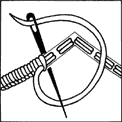
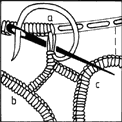
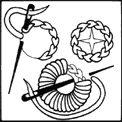
Today one usually means the cutwork and eyelet embroideries such as Richelieu used to decorate Grandmother's trousseau.
Fabric type: Closely woven, pure linen fabrics in plain weave are ideal. However, closely woven cottons used for bed linens are also suitable. Try tracing or grease-proof paper to trace a design, transfer it and work it. A monogram on a handkerchief or serviette/napkin is a good starting point to see if this is an embroidery technique that you can master and enjoy. The fabric must be densely woven so that the embroidery around the cut-out areas will hold. It must also be smooth so that you can easily draw (Water-erasable pencils & Transfer pencils) or iron on the pattern outlines. Clean, exact buttonhole stitch edges and outlines are only possible on fine-weave fabrics.
Recommended fabrics: We recommend 3225 KINGSTON pure linen with 55 threads/inch. It fulfills all the demands made by this time-consuming embroidery, is closely woven, smooth and has a high thread count. 3218 BATIST in 100% cotton is also suitable for very delicate, fragile white work.
Embroidery thread: 4-ply embroidery yarn is generally used, the weight depending upon the fabric type and the stitches employed. We recommend 4-ply yarn #20 or #25 on 3225 KINGSTON . For white work, always use a sharply pointed embroidery needle that accommodates your yarn.
Just a moment…
Your basket is hanging by a thread… 🧵
✦
It looks as though you left some stitching treasures behind at Willow Fabrics — but don't worry, we've carefully kept your basket safe and sound.
Completing your order is now even easier with our express checkout options including Klarna, Apple Pay, Amazon Pay, Google Pay
and more.
Your fabric, threads and crafty treats are still waiting patiently…
Trusted by thousands of stitching enthusiasts across the UK